The Sweetheart Font: Elegant Script for Handmade Labels & Invitations
As a maker who designs printable wedding suites, boutique candle labels, and seasonal SVG bundles for Cricut and Silhouette users, I’m always hunting for script fonts that balance beauty with real-world function. The Sweetheart stands out—not just because it’s pretty, but because it *works*. It’s a modern script font built for crafters who need elegance without sacrificing readability or cutting precision.
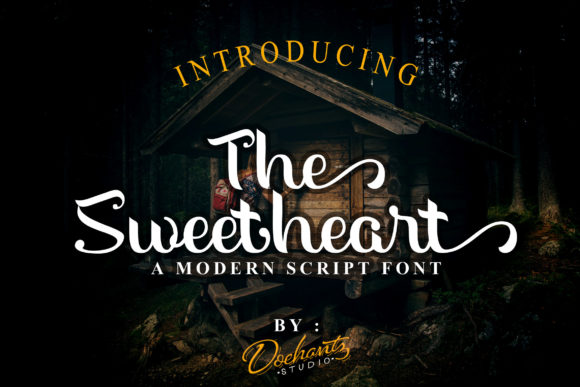
What makes The Sweetheart special is its thoughtful duality: lowercase letters flow with graceful, elegant script—soft curves, gentle entry/exit strokes, and natural rhythm. Uppercase letters lean into semi-blackletter structure—strong, slightly structured, with subtle historical weight. That contrast gives your designs instant personality: romantic yet grounded, decorative yet legible, timeless but unmistakably current. It’s not overly ornate, so it won’t overwhelm small stickers or narrow product tags—and it’s not so minimal that it fades into the background on a farmhouse welcome sign or a luxury soap label.
I’ve used The Sweetheart across dozens of physical and digital products—and each time, it elevates perceived quality. On matte-finish greeting cards, it reads like hand-lettered calligraphy. On kraft paper gift tags, it adds warmth without looking fussy. For wedding stationery, it softens formal layouts while keeping names and dates perfectly clear—even at 14 pt on printed RSVP cards. And yes—it cuts cleanly on my Silhouette Cameo 4. No tangled loops, no fragile terminals snapping off thin vinyl. That reliability matters when you’re prepping 50 sets for an Etsy order.
Here’s where The Sweetheart shines in everyday making:
- Candle & soap labels: Use uppercase for brand names (“Hearth & Honey”) and lowercase for scent descriptions (“vanilla + amber”). The contrast creates hierarchy—and customers notice it.
- Invitations & save-the-dates: Perfect for couple names, dates, and venue names. Its readability at 18–24 pt means guests won’t squint—and printers won’t reject files for thin strokes.
- Farmhouse signs & wall art: Pair “Gather” or “Home” in The Sweetheart with a warm wood grain mockup. The semi-blackletter caps hold up beautifully at larger sizes (36–72 pt), while the lowercase script keeps it inviting.
- Printable planner pages & digital downloads: Works well as a header font—especially for sections like “Monthly Intentions” or “Gratitude Log.” Avoid using it for full paragraphs, but it’s ideal for titles, dividers, and decorative accents.
- Tote bags, mugs, and tees: Because the letterforms are intentionally robust—not spindly or overly connected—it prints crisply in DTG and screen printing. I’ve tested it on light and dark apparel; it holds detail without ink bleed.
Readability isn’t accidental—it’s engineered. Unlike some expressive script fonts that vanish at small sizes, The Sweetheart maintains open counters and generous spacing. At 10 pt on a 1” sticker, “Hand-poured • Small Batch” stays legible. On a 2” product tag, “Made with Love in Portland” feels personal, not pixelated. And if you’re building mockups for Etsy listings, it renders smoothly in Canva, Adobe Illustrator, and Affinity Designer—no jagged edges or missing glyphs.
For pairing, I keep it simple: The Sweetheart loves clean, friendly sans serifs. Try it with Montserrat Light for digital templates, or Poppins Regular for packaging labels. If you prefer serif contrast, a gentle transitional face like Lora or Merriweather works beautifully—especially for wedding suites where you want warmth without formality. Never pair it with another script unless you’re intentionally layering textures (e.g., The Sweetheart for names + a bolder brush script for “Est. 2023”). Less is more here—the font carries presence on its own.
Inside the The Sweetheart package, you’ll find OTF and TTF formats—fully compatible with Cricut Design Space, Silhouette Studio, and commercial design software. There are standard ligatures (like “fi”, “fl”) and optional swashes for initials or decorative flourishes—great for monogrammed tote bags or boutique hang tags. While it doesn’t include extended Latin or Cyrillic support, it covers English, Western European languages, and common punctuation needed for most craft businesses. No hidden surprises—just straightforward, well-hinted glyphs.
Licensing is practical, too. The Sweetheart is a commercial font—meaning you can use it to create and sell physical products (stickers, mugs, invitations), digital downloads (PDF planners, SVG cut files), templates, and client work. No per-unit fees. No complicated attribution rules. Just one license covering your entire shop—including Etsy, Shopify, and wholesale orders. That peace of mind matters when you’re scaling from hobby to full-time handmade business.
It’s easy to overlook how much a single typeface shapes customer perception. A poorly chosen font can make handmade goods feel generic—even if the craftsmanship is exceptional. The Sweetheart does the opposite: it signals care, intention, and quiet confidence. When someone sees your lavender-scented candle labeled in The Sweetheart, they don’t just read “Lavender Fields”—they feel calm, thoughtfulness, attention to detail. That emotional resonance translates directly to repeat buyers, social shares, and word-of-mouth referrals.
If you’ve been reaching for the same safe script over and over—or avoiding scripts altogether because they’re too fragile or too fussy—give The Sweetheart a test run on your next label layout or invitation suite. It’s the kind of font that makes clients say, “I love how this looks—I didn’t even know I wanted *this* until I saw it.” And in the world of handmade selling, that kind of quiet magic? That’s what turns browsers into buyers.